Showing posts with label email best practices. Show all posts

Friday, May 18, 2012

Friday Bonus Blog: Forward this blog to 10 of your friends and Microsoft will pay you 1 million dollars (and other respect destroying communications)

Our blog has moved. You will find this blog post and fresh content on our new Talascend IT blog.

All too often during the course of a normal business day people commit technology communication etiquette disasters without ever realizing it.  By committing even a couple of these faux pas on a regular basis can alter the way people view your professional image, lose respect in the eyes of the people you are communicating with, and potentially also lose credibility.

What other damaging email mistakes do you see?
Communication suicides are not a new phenomenon, one specific example comes to mind when I received a letter in the mail 25 years ago from a close relative who I very much looked up to.  There was a single dollar bill in this letter, along with instructions for how I could make a fortune by sending out 10 dollars of my own money to 10 different people…and eventually I would receive many times that back as the pyramid continued to grow.  I never forgot this, and my relative’s image has been tarnished ever since that this was considered such a successful way to make money that they would recruit their own family into the scheme.

As postal mail has given way to e-mail, Facebook, Linkedin, and Twitter a whole new slew of potential communication disasters have been created.  Before you send out that next e-mail, or go into that upcoming interview, or reach out to a prospect on Linkedin - you should crosscheck what you’re about to do with the following list of reputation killers.

When you read some of these they sound like common sense, some are even comical, yet they all happen many times every single day.  Jeff Foxworthy has a very successful routine built around “You might be a redneck if….”jokes, so with that in mind this is the “You might be ruining your reputation….” list of technological suicide communications. 

You might be ruining your reputation if….

  1. You forward an e-mail that starts or ends with “If you forward this e-mail to 10 friends…”
  2. You hit reply all on an e-mail where the response should only go back to the message originator, not all 500 recipients.
  3. YOU SEND AN E-MAIL IN ALL CAPS
  4. You try to connect to to someone on Linkedin whom you’ve never met- and you don’t write a personalized message letting them know why you are stalking them.
  5. You stalk someone weekly on Linkedin looking at their profile and always showing up under the recently viewed list.
  6. You haven’t talked to someone in 20 years and you try to their friend on Facebook without sending any kind of personal message.
  7. You try to friend someone on Facebook who you vaguely knew 20 years ago and try to make them your friend on Facebook so you can see their pictures.
  8. You keep trying to be someone’s friend on Facebook no matter how many times they hit ignore.
  9. You send a txt using more emoticons than real worlds.
  10. You BCC someone on an e-mail.  (There is no good use for BCC)
  11. You CC someone on an e-mail in a conversation or topic they have never been included in and know nothing about.
  12. You forward an e-mail saying “FYI”, and nothing else after it- showing that you have not put any thought into what is important for the recipient to pay attention to.
  13. You send an e-mail that says “Got it” or “I’m on it” as a response to a task.
  14. You forward any e-mail that purports to be a dying child’s last wish to reach 10,000 people.
  15. You tell someone how they can make $1000’s of dollars working at home, or turning their computer into a money making machine.
  16. You ask someone if they really think that you are the sole benefactor of your long lost unknown uncle in Nigeria.
  17. You come into an interview and your phone ringer is the latest Nickelback song.

I encourage you to please leave a comment with any items you think should be on this list!

Monday, March 19, 2012

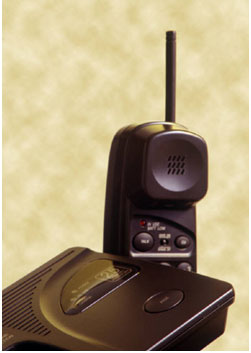
Is Email Going the Way of the Answering Machine?

Our blog has moved. You will find this blog post and fresh content on our new Talascend IT blog.

Take a look at your inbox at work. How many unread messages are being displayed? Now, take a look at your personal email box. How many of those gems pile up before you take on the task of clearing out the old only to be replaced by more?

Articles on email efficiency, best practices, etiquette and more are all over the Web. Email can be overwhelming for some users. One has to think, while going through their inbox on a daily basis and removing superfluous messages and the occasional spam message that gets through, that there has to be a better way. Noted technology and social media guru Amber Mac recently posted a video interview with an executive at Microsoft who takes month-long sabbaticals from email to attend to more important matters.

Is your inbox becoming an answering machine?
We’re at the very beginning of an interesting trend, or the end of a cycle depending on how you look at it.  If we compare email adoption to answering machines, which actually have significant similarities, we are seemingly at the initial phase of email’s demise, while in a Darwinian-esque manner, answering machines have all but become extinct.

Answering machines were created in the end of the 1800’s. However, it wasn’t until 1984 that they really boomed, when phone providers started letting customers buy and own their telephone equipment. During the course of their history, answering machines went from a way to get a message when you weren’t available, to a device used to avoid taking calls when not convenient, to a way to screen your calls, to a device that people largely ignored, often hanging up before leaving a message.

This last iteration of the answering machine life-cycle was likely a result of people starting to be overwhelmed and deleting messages before they listened to them, potentially missing important information in the process. While there are some answering machines still in use today, they have largely become an obsolete physical device replaced by electronic voicemail, which went through much the same cycle only more rapidly.

According to research in 2010 by the Radicati Group , the average corporate email user sends and receives about 110 emails per day. Roughly a fifth of that email is unwanted or unsolicited. (Although, depending on the user, on a bad or busy day the number of unwanted emails can reach closer to 100%.) For private accounts the opposite is largely true. People are inundated with messages; not just the 97% of it that is worthless spam, but the 3% that is real information. It can be, and often is, more than anyone can handle in a given day. Add to that, the emails received separately on social and professional networks, and it can get pretty darn overwhelming.

The result, in most cases, is ignored messages.

Email has, in a way, become a sort of stream of information from which people pick and choose what to read and what to reply to, often missing something important because of the sheer volume. This is true of both corporate and private users. Meetings have to be rescheduled. Deals are stalled. Or worse, you might miss out on the 50%-off, four-hour tablet sale for which you’ve been waiting as a consumer.

Text messages, social media, smart phones and instant messaging are also cutting into email’s usefulness as a means of communication. (Although, the advertising and marketing explosion occurring in these realms is likely going to destroy their usefulness even faster than electronic voicemail.) If you want to get a hold of someone, heck if you want to see someone while talking, it’s as simple as pressing a button and pointing your phone at your face.

It seems as if email is at a crossroad. Much like the answering machine on which people hit delete before getting to the end, people are starting completely ignoring e-mail at times. Every day may become a sabbatical of sorts, either by intention or purely for efficiency’s sake.

Much like the smart phone ads suggest, it appears as if email is quickly becoming, “so 18 seconds ago.” Waiting for a reply to your urgent messages is becoming a thing of the past. If an immediate response is needed, one only has to send a quick text or jump on Skype to ping their target. It’s hard to fathom but, instant chat, services like Skype, video chat, and potentially, resurgence in phone use, will likely replace e-mail to some extent in the coming years.

Now where did I put my pager?